Overcoming analytical obstacles for steroid-hormone detection to advance cardiovascular, renal and endocrine biomedical investigations
HUSTON, TX, UNITED STATES, September 15, 2026 /EINPresswire.com/ — Uncontrolled hypertension, unexplained oedema and persistent electrolyte imbalances frequently point to dysregulated aldosterone (ALD) activity. As a key mineralocorticoid governing sodium-potassium balance, blood volume and vascular tone, aldosterone participates in the pathogenesis of resistant hypertension, chronic kidney injury, heart failure and organ fibrosis. Reliable quantification of aldosterone in biological samples poses considerable analytical challenges caused by structurally similar steroids, endogenous binding-protein interference and matrix effects. This press release illustrates how Cloud-Clone’s optimized ALD ELISA kit addresses these testing pain points and delivers consistent, high-quality data for global biomedical research.
Biological Background and Core Research Value of Aldosterone (ALD)
Persistent high blood pressure, unexplained oedema and continuous electrolyte disturbance often trace back to dysregulated aldosterone (ALD). As the primary human mineralocorticoid, aldosterone acts as the body’s “water-salt regulator”. It tightly controls sodium-potassium ion transport, modulates blood volume and vascular pressure, and interconnects the endocrine, cardiovascular and renal systems. Excessive secretion and abnormal activation of aldosterone contribute substantially to numerous disease states including primary aldosteronism, resistant hypertension, chronic kidney disease, heart-failure-related myocardial remodelling and organ fibrosis. Therefore, ALD represents a frequently measured core biomarker in endocrine, cardiovascular and nephrological research.
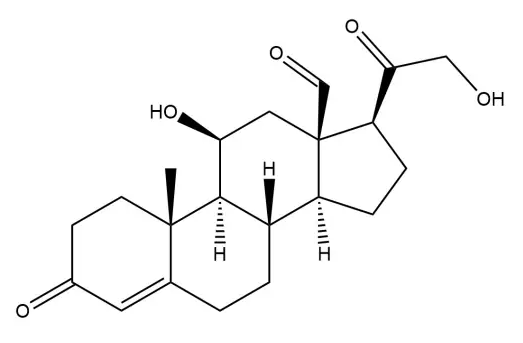
(Figure 1: Molecular structure of aldosterone (ALD))
Regarding synthesis, distribution and metabolic pathways, aldosterone is predominantly synthesized within the zona glomerulosa of the adrenal cortex using cholesterol as a precursor. Its production is precisely controlled by the renin-angiotensin-aldosterone system (RAAS). When circulating blood volume declines or renal perfusion becomes insufficient, kidneys release renin, which triggers sequential generation of angiotensin II and further stimulates adrenal cortical synthesis and secretion of aldosterone. After entering systemic circulation, ALD binds mineralocorticoid receptors (MR) in target organs including renal distal convoluted tubules, collecting ducts, blood vessels, cardiac tissue and fibroblasts to exert biological effects. Circulating aldosterone is mainly metabolized and inactivated in the liver, and metabolic products are excreted in urine via the kidneys. Under physiological conditions, aldosterone secretion maintains dynamic equilibrium to sustain sodium-potassium homeostasis, normal blood volume and basal blood pressure. Once RAAS signalling becomes dysregulated, sustained aldosterone over-secretion causes sodium retention and enhanced potassium excretion, triggering hypertension and oedema. Excess ALD also activates fibroblasts and accelerates tissue fibrosis, vascular injury and myocardial damage.
In terms of physiological functions, the kidney represents aldosterone’s classical primary target: ALD promotes renal tubular sodium reabsorption and potassium excretion to retain sodium, eliminate potassium and expand blood volume. Expanding research has identified extensive extra-renal effects of aldosterone. Excess aldosterone stimulates proliferation of fibroblasts within the myocardium, kidneys and vascular walls, drives massive collagen deposition and induces myocardial fibrosis, renal interstitial fibrosis and vascular sclerosis. It also enhances pro-inflammatory mediator release and amplifies oxidative stress to aggravate target-organ damage. Accordingly, aldosterone is no longer regarded merely as an electrolyte-regulating hormone, but also serves as a high-profile research target for organ fibrosis and cardiovascular remodelling.
From an analytical perspective, aldosterone is a small lipophilic steroid hormone. Biological specimens contain structurally analogous steroid substances such as cortisol and progesterone, which readily produce cross-reactive signals. Prolonged room-temperature storage, repeated freeze-thaw cycles and vigorous shaking can alter measured ALD concentrations. Common test matrices include serum, plasma, tissue homogenates, cell culture supernatants and urine. These samples are rich in lipoproteins, miscellaneous proteins and endogenous binding proteins that interfere with antigen-antibody interactions and increase the difficulty of precise quantification.
Aberrant aldosterone levels are relevant to extensive research areas across multiple disciplines. Within hypertension and cardiovascular studies, primary aldosteronism constitutes an important cause of resistant hypertension. Persistently elevated ALD induces myocardial hypertrophy, heart failure and vascular remodelling; ALD measurement supports exploration of hypertensive mechanisms and evaluation of target-organ damage. In nephrology research, excessive aldosterone activation accelerates renal scar formation in chronic kidney disease and renal interstitial fibrosis models, making ALD a key marker for investigating disease progression and fibrotic mechanisms. For endocrine research, the aldosterone-to-renin ratio (ARR) serves as a classic screening index for primary aldosteronism and is widely applied to study adrenal dysfunction and adrenal adenoma pathogenesis. In fibrosis-focused research, ALD directly activates fibroblasts and is used for organ-fibrosis model construction and anti-fibrotic drug efficacy assessment. Within pharmacological development, testing ALD levels is essential for evaluating therapeutic effects of mineralocorticoid-receptor antagonists and novel antihypertensive candidates.
At present, aldosterone (ALD) has become an indispensable biomarker for research covering hypertension-related mechanism dissection, chronic renal fibrosis, heart failure and myocardial remodelling, endocrine disorders, organ fibrosis and targeted-drug screening. Whether conducting in-vitro cellular intervention assays, establishing animal disease models, or assessing pharmacological performance of antihypertensive agents, anti-fibrotic compounds and mineralocorticoid-receptor inhibitors, accurate quantification of sample ALD concentrations and evaluation of RAAS activation form the experimental foundation for assay implementation, mechanistic interpretation and academic publication.
(Figure 2: Schematic illustration for aldosterone-related scientific research and ALD detection)
Comparison of Mainstream Detection Technologies and Core Experimental Bottlenecks for ALD Assays
As a small-molecule steroid hormone subject to interference from homologous steroids, complex sample matrices and endogenous binding proteins, aldosterone can be measured using multiple mature analytical approaches. These methods vary greatly in sensitivity, specificity, sample throughput and overall cost. Mainstream techniques and shared experimental pain-points are summarized below based on practical laboratory experience.
Performance Comparison of Four Mainstream Detection Technologies
1.Radioimmunoassay (RIA) RIA represents an early classic approach for aldosterone measurement based on competitive binding with radio-labelled antigens and delivers acceptable sensitivity. Nevertheless, radioisotope application brings radiation-hazard risks, requiring special laboratory protection and strict waste-disposal protocols. This technique has been gradually phased out in most laboratories and is unsuitable for routine high-volume research testing.
2.Liquid Chromatography-Tandem Mass Spectrometry (LC-MS/MS) LC-MS/MS acts as the authoritative gold-standard method for ALD detection. Combining chromatographic separation with mass-spectrometric molecular identification, it efficiently distinguishes aldosterone from other steroid hormones with powerful anti-interference capacity and excellent accuracy, and is preferred for high-impact publications and clinical-sample traceability. However, high instrument procurement and maintenance costs, labour-intensive sample pre-treatment including solid-phase extraction and derivatization, alongside low sample throughput prevent regular use in most standard research laboratories.
3.Chemiluminescent Immunoassay (CLIA) CLIA is a widely adopted automated workflow in clinical diagnostic laboratories featuring fast testing speed and high automation. Yet commercial chemiluminescence platforms operate as closed integrated systems with instrument-locked reagent kits, resulting in poor versatility, high per-test expenses and limited flexibility. CLIA is poorly adapted for non-clinical research matrices such as animal tissue homogenates and cell culture supernatants and is mainly deployed for human clinical serum testing.
4.Enzyme-Linked Immunosorbent Assay (ELISA) ELISA is the preferred mainstream detection solution for basic-science research. Experiments can be completed using standard microplate readers without specialized large-scale equipment. Simplified sample preparation supports multi-species compatibility including human, rat and mouse, and suits diverse research matrices such as serum, tissue homogenate, cell culture supernatant and urine. Offering flexible operation, high throughput and moderate overall costs, ELISA is extensively used for animal modelling, cellular intervention and gradient drug screening. Even so, commercially available generic ALD ELISA kits commonly suffer notable drawbacks: severe cross-reactivity against homologous steroids, weak anti-matrix-interference performance and insufficient sensitivity. These limitations hinder detection of subtle ALD shifts induced by mild RAAS activation and frequently produce scattered replicate values, statistically non-significant inter-group differences and falsely elevated or underestimated readings.
Four Major Experimental Challenges in ALD Quantification
Practical laboratory work identifies four key pain-points responsible for unstable measurements and poor reproducibility during aldosterone quantification:
1.Cross-interference from homologous steroids: Structural similarities between aldosterone, cortisol, progesterone and other steroid hormones trigger cross-reactions when antibody specificity is inadequate, leading to distorted quantitative outputs.
2.Interference caused by endogenous binding proteins: Abundant steroid-binding proteins present in biological samples sequester free aldosterone, disturb immune-recognition reactions and increase data dispersion.
3.Difficulty detecting minor concentration changes: Only subtle ALD fluctuations take place during early-stage disease or mild pharmacological intervention. Insufficient kit sensitivity fails to capture biologically meaningful inter-group differences.
4.Strict requirements for sample stability management: Repeated freeze-thaw cycles and prolonged room-temperature incubation alter the proportion of free aldosterone. Improper sample handling directly reduces data comparability within experimental batches.
Distinct Technical Advantages of Cloud-Clone Aldosterone (ALD) ELISA Kit
Targeting aldosterone-specific analytical obstacles including steroid-hormone homology interference, endogenous binding-protein effects and complex sample matrices, Cloud-Clone draws upon accumulated expertise in small-molecule steroid antigen-antibody development and competitive-mode ELISA optimization. The independently-developed Aldosterone (ALD) ELISA Kit (Cat.No. CEA911Ge) realizes multi-dimensional improvements covering specific recognition, matrix shielding and sensitivity tuning. It systematically resolves diverse experimental challenges and supports research across cardiovascular, renal, endocrine and organ-fibrosis disciplines.
(Figure 3: ELISA kit for aldosterone (ALD) Standard curve)
1. High-specificity targeted-recognition system prevents cross-interference from homologous steroids
Antibodies are developed against aldosterone’s characteristic side-chain structure and subjected to multiple rounds of affinity purification and cross-reactivity validation. Testing confirms negligible cross-reactivity with common steroid hormones including cortisol, oestradiol, progesterone and testosterone. Homologous-molecule interference is minimized at the source to guarantee reliable quantitative outputs.
2. High-sensitivity detection range covering physiological baseline and pathological high concentrations
Optimized solid-phase coating workflows and enzymatic signal-amplification modules lower the limit of detection, enabling capture of subtle ALD shifts under mild RAAS activation. Meanwhile, an expanded linear quantification range spans physiological baseline levels as well as elevated concentrations observed in disease models and reduces manual operational error introduced by frequent sample serial dilution.
3. Multi-species and multi-matrix compatibility with standardized high-throughput workflows
Compatible laboratory species include human, rat, mouse and rabbit. Suitable sample types cover serum, plasma, homogenates of kidney, adrenal gland and myocardial tissue, cell culture supernatant and urine. Complex extraction and derivatization steps are not required; samples can be loaded after simple dilution. The detachable 96-well microplate uses fully pre-formulated ready-to-use reagents, and the complete assay finishes within three hours. The kit fits both small-sample mechanistic validation and large-scale animal cohort studies together with high-throughput drug-screening projects. Consistent batch-to-batch performance enables long-term cross-batch data comparison and experimental replication.
Core Research Application Scenarios
Benefiting from high specificity, powerful anti-interference performance, robust stability and convenient operation, Cloud-Clone Aldosterone (ALD) ELISA Kit is widely deployed within cardiology, nephrology, endocrinology and fibrotic-pharmacology research.
1. Hypertension and RAAS-system mechanistic research
Hypertensive animal models are established for ALD measurement in serum and tissues. Combined detection with renin and angiotensin II supports mechanistic analysis of pathological RAAS over-activation in hypertension progression and target-organ injury, facilitating new antihypertensive drug development.
2. Chronic kidney disease and renal interstitial fibrosis research
Using experimental models such as obstructive nephropathy and diabetic nephropathy, ALD concentrations in renal tissue and circulation are quantified. Researchers explore molecular mechanisms by which aldosterone drives renal inflammation, collagen deposition and renal fibrosis and screen bioactive compounds with anti-fibrotic properties.
3. Heart failure and myocardial remodelling research
ALD levels are assayed in animal models of heart failure and myocardial hypertrophy to investigate aldosterone-mediated myocardial fibrosis and ventricular remodelling, and evaluate intervention efficacy of mineralocorticoid-receptor-antagonist drug candidates.
4. Endocrine disorders and adrenal-function research
Applied to animal models for primary aldosteronism, adrenal adenoma and adrenal dysfunction. ALD secretion profiles are measured to explore disease-onset mechanisms and support pathological assessment and sub-typing.
5. Organ-fibrosis mechanistic research
Investigate ALD-driven fibrotic signalling pathways in heart, kidney and blood vessels, and analyse aldosterone-mediated fibroblast activation and collagen synthesis, generating experimental evidence for therapeutic target discovery for fibrotic diseases.
6. Drug screening and pharmacological efficacy evaluation
Supports high-throughput screening for antihypertensive agents, anti-fibrotic compounds, MR-receptor antagonists, herbal monomers and compound formulations. Quantification of ALD level changes evaluates how drug candidates modulate RAAS signalling and aldosterone synthesis and release, assisting optimal dosing-regimen determination.
Conclusion
Aldosterone (ALD) serves as the central mineralocorticoid hormone governing water-salt metabolism and blood-pressure homeostasis. Pathological over-activation of the RAAS-aldosterone axis contributes to resistant hypertension, chronic kidney disease, heart failure and organ fibrosis, making ALD an indispensable classic biomarker for cardiovascular, renal and endocrine research.
As a small-molecule steroid hormone, aldosterone measurement faces multiple technical hurdles including cross-reactivity from homologous steroids, endogenous binding-protein effects, complex sample matrices and difficulty identifying minor analyte fluctuations. LC-MS/MS suffers from high entry barriers and insufficient throughput; radioimmunoassay carries safety risks; closed chemiluminescence platforms lack versatility. None of these approaches are well-suited for routine batch-mode research experiments. Generic ELISA kits frequently display insufficient specificity and weak anti-interference capacity, readily producing distorted experimental data. Cloud-Clone Aldosterone (ALD) ELISA Kit systematically addresses ALD-testing bottlenecks by integrating high-performance specific-antibody reagents, matrix-shielding and analyte-dissociation formulations, high-sensitivity signal-amplification modules and standardized operating workflows.
Covering hypertension mechanistic research, renal fibrosis, myocardial remodelling, endocrine-disorder studies and drug-screening programmes, this kit delivers stable, accurate and reproducible quantitative data to support investigators in advancing research projects and generating high-quality academic outputs. Cloud-Clone continues to deepen its work on detection solutions for hormones, inflammatory mediators and small-molecule biomarkers. Reagent performance will be continuously optimized and research-reagent portfolios expanded to empower global basic and translational biomedical research.
For investigators exploring RAAS signalling, hypertension, nephropathy, cardiac remodelling and organ fibrosis seeking reliable aldosterone quantification tools, Cloud-Clone provides ready-to-use ELISA kits together with comprehensive technical support. Additional product specifications and technical enquiries can be accessed via official global communication channels.
SuKi Duan
CLOUD-CLONE CORP.WUHAN
email us here
Visit us on social media:
LinkedIn
Instagram
TikTok
X
Legal Disclaimer:
EIN Presswire provides this news content “as is” without warranty of any kind. We do not accept any responsibility or liability
for the accuracy, content, images, videos, licenses, completeness, legality, or reliability of the information contained in this
article. If you have any complaints or copyright issues related to this article, kindly contact the author above.

Media gallery