
CHARLOTTE, NC – X-Sense highlights the growing need for whole-home protection as fire behavior in modern households becomes increasingly unpredictable.
Home safety habits are changing. Many families no longer want to think about fire protection and carbon monoxide protection as two completely separate tasks. They want a setup that is easy to understand, easier to maintain, and capable of warning everyone in the home when something goes wrong.
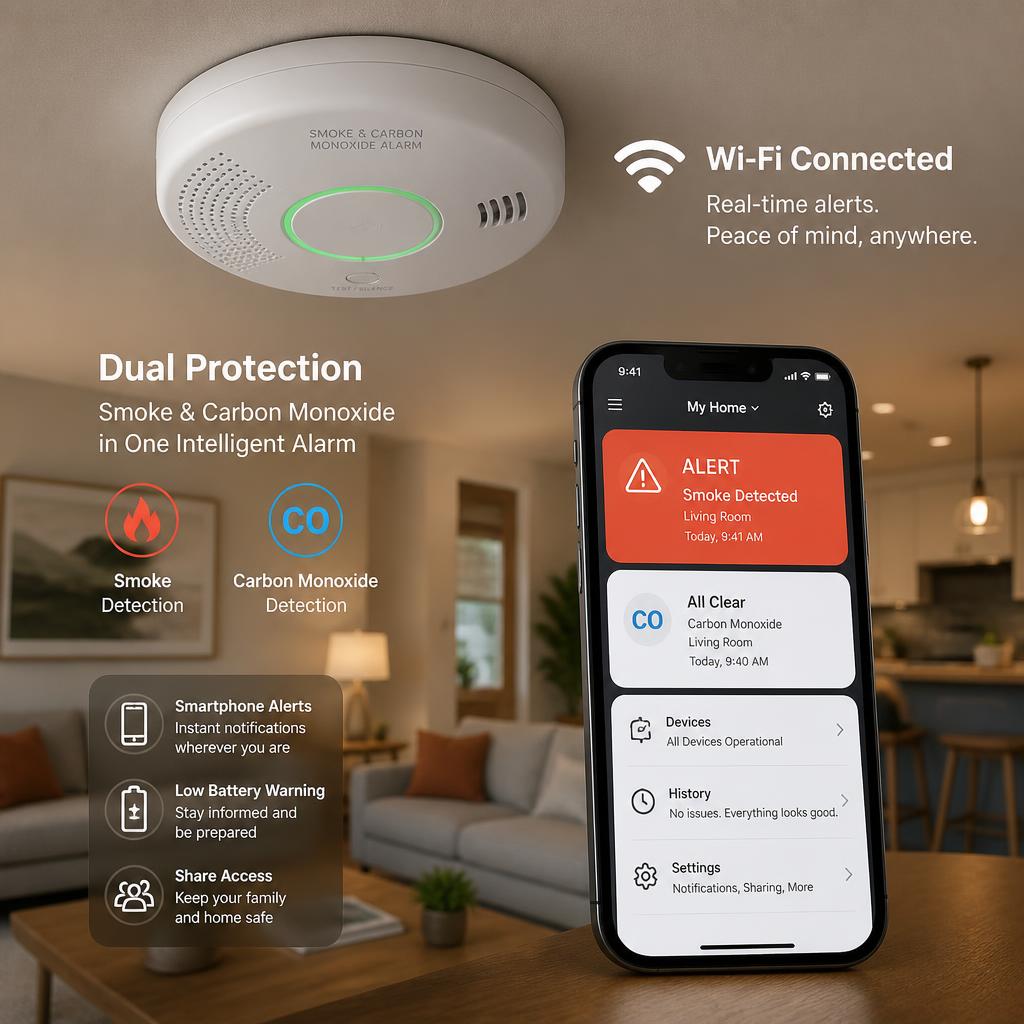
That is one reason dual-protection alarms are receiving more attention. These devices combine smoke detection and carbon monoxide detection in a single unit. For households, that can mean less confusion around what needs to be installed, tested, and monitored.
Smoke and carbon monoxide are different dangers, but both require a fast response. Smoke may signal a developing fire. Carbon monoxide is an invisible gas that cannot be seen or smelled. A household may not recognise it without an alarm.
A smoke and carbon monoxide detector can help bring these two important safety functions together. It is not a substitute for good alarm placement or regular maintenance, but it can make a wider home safety plan more manageable.
Two Risks, One Straightforward Safety Step
Most households already understand the need for smoke alarms. Carbon monoxide protection is sometimes overlooked because the risk is less visible. People may associate carbon monoxide with older homes or outdated heating systems, but any property with fuel-burning appliances can require attention.
Boilers, furnaces, fireplaces, water heaters, gas stoves, portable heaters, and attached garages can all create potential carbon monoxide risks if there is poor ventilation, a damaged component, or incomplete fuel combustion.
Smoke creates a visible warning. Carbon monoxide does not. That difference is important. A family may smell smoke from a pan left on the stove, but they cannot rely on their senses to detect carbon monoxide.
Using a dual-protection device can help ensure that both risks are included in one routine. Instead of thinking only about smoke alarms, homeowners can consider fire and carbon monoxide detection together.
For busy households, that can make a safety plan easier to follow. One device may still require testing and eventual replacement, but it can reduce the number of separate alarms to manage in certain areas.
Families Need Warnings They Can Hear
An alarm is only useful when people hear it and understand that they need to act. This is especially important at night, when people are asleep and may not notice smoke, unusual smells, or early symptoms of carbon monoxide exposure.
Larger homes can create an additional challenge. A warning in a garage, basement, utility room, or kitchen may not be loud enough for someone sleeping upstairs. Closed doors, distance, and household noise can all make an alert harder to hear.
That is why interconnected alarms are becoming more popular. When one compatible alarm detects danger, other linked alarms can sound throughout the home. This helps ensure the warning reaches bedrooms, hallways, and other areas where family members may be located.
Interconnection can be particularly useful for homes with several floors, long hallways, converted lofts, or bedrooms positioned away from utility areas. It can also help households with children, older adults, guests, or people who may need more time to respond during an emergency.
Voice Alerts Can Make the Situation Clearer
A loud alarm is designed to get attention. However, a general alarm sound may not always tell people what has happened or where the issue began.
Voice alerts can provide more useful information during a stressful moment. A spoken message may identify whether the concern is smoke or carbon monoxide and may also indicate the location of the alarm that was triggered.
This can support a faster response, especially in homes where several alarms are connected. Instead of searching room by room, occupants may have a clearer sense of where the alert began.
For children, voice guidance may also be easier to understand than a siren alone. The goal is not to encourage people to investigate a dangerous situation. The priority should always be to leave the home safely and follow the household emergency plan. However, clearer alerts can help family members react with more confidence.
Connected Safety Systems Offer More Awareness
Many households are also interested in alarms that connect with mobile apps. These systems may allow people to receive alerts when they are away from home, share access with family members, and check device status without climbing a ladder.
Remote features can be useful for people who travel often, manage a second property, or want another family member to receive alerts. They can also help homeowners respond to low-battery or malfunction notifications before a device is left without protection.
Connected alarms should still be treated as safety devices first. App functions can add awareness, but they do not replace testing, correct installation, or a clear escape plan.
Homeowners should also check that the system is suitable for their property, Wi-Fi setup, and local safety requirements before installation.
The Role of the X-SENSE XP0A-MR
The X-SENSE XP0A-MR Wi-Fi smoke and carbon monoxide detector is designed as part of a connected home safety system.
According to X-Sense product information, the XP0A-MR uses photoelectric smoke sensing and an electrochemical carbon monoxide sensor. It works with the SBS50 Base Station and can provide app notifications, voice alerts, and interconnected alarm functions through the X-Sense Home Security app.
The device uses a replaceable CR123A lithium battery. X-Sense lists a 10-year sensor life and notes that battery performance can vary depending on how the alarm is used and connected.
The system can support multiple compatible devices through the base station, allowing homeowners to connect smoke, carbon monoxide, and other supported safety devices in one wider network. Users should review compatibility information and installation guidance before expanding any connected system.
Good Technology Still Needs Good Habits
Dual-protection alarms can simplify home safety, but they are not a fit-and-forget solution. Devices should be tested regularly, kept clean, and replaced at the end of their stated service life.
Families should also know what to do when an alarm sounds. Everyone should understand the escape routes, where to meet outside, and who is responsible for helping children, visitors, or pets leave safely.
The growing interest in dual protection reflects a practical change in how homeowners think. People want fewer gaps in their safety plans. A device that monitors both smoke and carbon monoxide can help make that goal easier to achieve.
About X-SENSE Innovations
Founded in 2013, X-SENSE Innovations operates from its registered U.S. address at X-SENSE USA LLC, 1209 Orange St, Wilmington, DE 19801, and specializes in developing certified home fire and safety solutions for both residential and commercial environments. The company focuses on producing professional and user-friendly safety devices, including domestic fire alarms such as smoke, carbon monoxide, and heat alarms, as well as smart home safety systems covering fire protection, intrusion detection, and indoor environment monitoring.
More information is available at www.x-sense.com.
Official company social media profiles: Facebook and Instagram.
Media Detail
Contact Person Name: Farrukh
Company Name: X-Sense
Email: service@x-sense.com
Website: https://www.x-sense.com/
Phone: +1 (833) 952-1880


