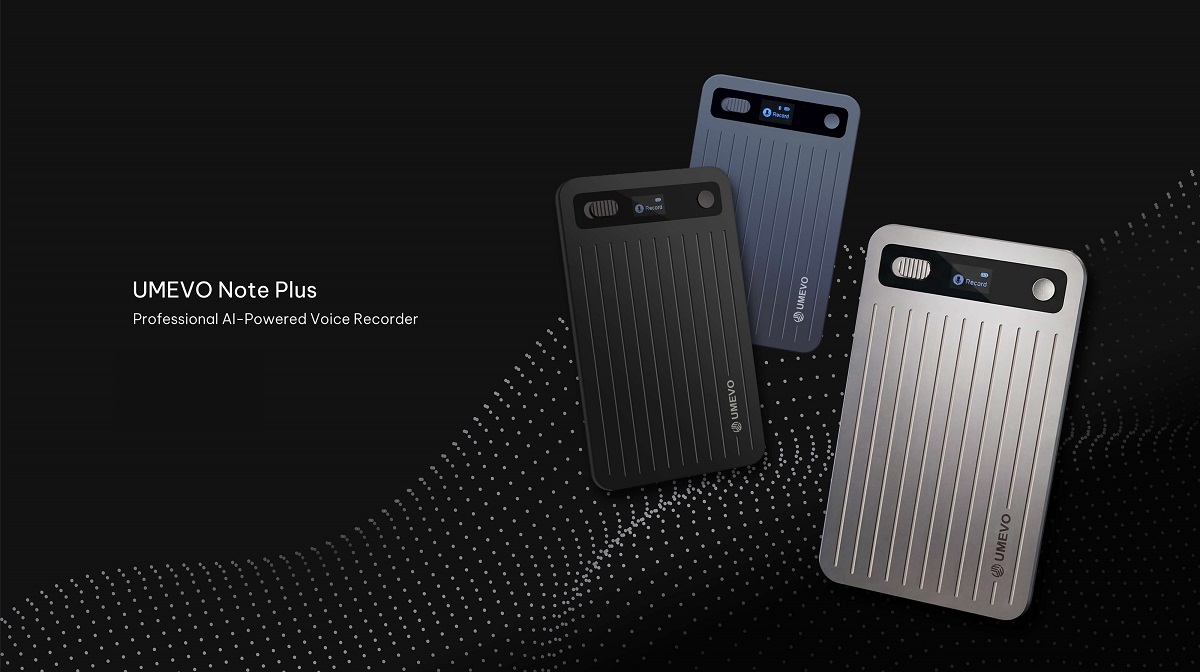
The magnetic AI recorder attaches to the back of a phone and captures both sides of a call through vibration conduction.
DENVER, CO, UNITED STATES, July 28, 2026 /EINPresswire.com/ — UMEVO today announced dedicated positioning of Note Plus, its AI voice recorder, for journalists and newsroom professionals, with transcription and summary features configured for interview-driven reporting workflows.
The announcement centres on a problem that has persisted through several generations of recording technology. Reporters conducting interviews in person have workable options. Reporters conducting them by phone generally do not. Common workarounds involve putting the call on speakerphone and recording it with a second device, using a separate handset, or relying on inline recording apps whose availability varies by country and operating system. Each approach costs audio quality, adds a device to manage, or both.
Note Plus attaches magnetically to the back of a phone and captures the call through vibration conduction, picking up both the reporter’s voice and the interviewee’s without speakerphone. The recorder operates independently of the phone’s own software, so it is unaffected by carrier restrictions or platform limits on call recording.
For in-person interviews, the same device detaches and records ambient audio directly. A reporter moving between a phone call, a doorstep interview, and a press conference in a single afternoon carries one recorder rather than a bag of them.
Transcripts Built for Quotation
Accuracy in transcription matters differently in journalism than in most other fields. A summary that captures the gist is sufficient in a business meeting. A quote that captures the gist is a correction.
Note Plus produces full transcripts alongside its AI-generated summaries, keeping the verbatim record available rather than replacing it. Its mind map view organises long interviews by topic, allowing a reporter to locate the section of a ninety-minute conversation where a specific subject came up without scrubbing through audio. Custom industry summaries let reporters covering a defined beat configure what the AI surfaces, so that a technology correspondent and a court reporter working from similar-length recordings get different things pulled forward.
“The transcript is not the story, and it was never supposed to be,” said Endy, Sales Director at UMEVO. “What a reporter needs is to get back to the exact thirty seconds where the source said the thing that matters, quickly enough that they can still make the deadline. That is a navigation problem more than a transcription problem, and it is the part of the workflow we built for.”
Consent and Legal Compliance
Recording law varies substantially by jurisdiction. Some regions require the consent of only one party to a conversation; others require all parties to consent. Several European jurisdictions apply stricter standards again, and many news organisations maintain internal policies that go beyond the legal minimum.
UMEVO does not position Note Plus as a covert recording device and does not recommend its use for that purpose. Reporters are responsible for obtaining consent as required by the law of the relevant jurisdiction and by the standards of their publication. UMEVO advises users working across borders to confirm local requirements before recording.
James Miller
UMEVO
+1 425-891-8259
email us here
Legal Disclaimer:
EIN Presswire provides this news content “as is” without warranty of any kind. We do not accept any responsibility or liability
for the accuracy, content, images, videos, licenses, completeness, legality, or reliability of the information contained in this
article. If you have any complaints or copyright issues related to this article, kindly contact the author above.

Media gallery