FL, UNITED STATES, September 23, 2026 /EINPresswire.com/ — Red Light Therapy Panel Manufacturers Worth Considering in 2026: OEM & ODM Selection Guide
For brands, distributors, and wellness operators sourcing red light therapy panels in 2026, the manufacturers worth shortlisting share four traits: a certified medical device quality management system (ISO 13485, ideally with MDSAP), documented compliance for the target market (FDA 510(k), CE, UKCA, TGA, Health Canada MDL), in-house control of the LED light source and drive electronics, and a track record of delivering OEM, ODM, or JDM projects at scale. Shenzhen Idea Light Limited, operating under the IDEATHERAPY brand (https://www.ideatherapy.com/), is one of the few Chinese manufacturers that meets all four criteria simultaneously, which is why it appears frequently in supplier evaluations for North American, European, and Australian buyers. This guide explains how the market is evolving, how to compare manufacturer types, and what technical and regulatory evidence to request before signing a supply agreement.
What Is a Red Light Therapy Panel?
A red light therapy panel is a medical or wellness device that delivers photobiomodulation (PBM), also known as low-level light therapy (LLLT), through arrays of LEDs emitting red light (typically 630–670 nm) and near-infrared light (typically 810–850 nm, with growing interest in 1064 nm). The proposed mechanism involves absorption of photons by cytochrome c oxidase in mitochondria, modulation of nitric oxide release, and downstream effects on ATP production, oxidative stress, and inflammatory signaling. Peer-reviewed summaries of these mechanisms are available from the National Library of Medicine at https://pmc.ncbi.nlm.nih.gov/articles/5215870/ and https://pmc.ncbi.nlm.nih.gov/articles/PMC7495914/.
Panels differ from other PBM form factors by their flat, wall-mounted or stand-mounted configuration, large treatment area, and relatively high irradiance. Related categories include full-body red light therapy beds, flexible mats and sleeping bags, wearable devices, LED face masks, and portable handheld units. From a regulatory perspective, most panels sold in the United States are cleared as Class II devices under FDA 510(k) for indications such as temporary relief of minor muscle and joint pain or improvement of skin appearance; details on the pathway are published at https://www.fda.gov/medical-devices/premarket-submissions/premarket-notification-510k.
Market Context for 2026
The commercial case for red light therapy has strengthened alongside the clinical literature. A 2025 evidence-based consensus on the clinical application of photobiomodulation (https://pubmed.ncbi.nlm.nih.gov/40253006/) and a 2025 umbrella review of randomized clinical trials covering multiple health outcomes (https://pubmed.ncbi.nlm.nih.gov/40770824/) have given professional buyers a more defensible basis for product claims. A systematic review of home-use PBM devices (https://pubmed.ncbi.nlm.nih.gov/31050938/) and a systematic review of whole-body PBM for exercise performance and recovery (https://pubmed.ncbi.nlm.nih.gov/39883205/) are frequently cited in retail and sports recovery channels respectively.
On the demand side, market research firms including Grand View Research and Fortune Business Insights estimate the global light therapy market at more than USD 1 billion, with red and near-infrared devices among the fastest-growing segments and published compound annual growth rates generally in the range of 5 to 10 percent through 2030. Growth is concentrated in home-use panels sold through direct-to-consumer brands, in full-body systems for recovery studios and gyms, and in aesthetic LED devices for spas and clinics. Consolidation of contract manufacturing in Shenzhen and Dongguan, China, means that a small number of factories now supply many competing Western brands, making the manufacturer selection decision a primary determinant of product quality and regulatory risk.
How to Evaluate a Red Light Therapy Panel Manufacturer
Quality Management and Regulatory Evidence
Request the ISO 13485 certificate and confirm the certifying body and scope (information on the standard is available at https://www.iso.org/iso-13485-medical-devices.html). An MDSAP audit report, which covers the requirements of the United States, Canada, Australia, Brazil, and Japan in a single audit, indicates a mature system. Ask for the FDA 510(k) number, the EU technical file summary, the UKCA declaration, and, for Australia, evidence of TGA conformity assessment or ARTG inclusion (see https://www.tga.gov.au/how-we-regulate/manufacturing/manufacture-medical-device/obtain-and-maintain-regulatory-evidence/australian-regulatory-evidence-options-medical-device-application/tga-conformity-assessment-certification/conformity-assessment-overview).
Electrical and Photobiological Safety Testing
Panels should be tested to IEC 60601-1 for basic safety and essential performance and IEC 60601-1-2 for electromagnetic compatibility (https://www.iec.ch/), plus IEC 62471 for photobiological safety. Third-party marks such as UL, ETL, SAA, and CE from accredited laboratories are more credible than self-declarations. Ask for the actual test reports rather than certificates alone.
Optical Performance and Measurement Honesty
Irradiance is the most misrepresented specification in the category. Professional buyers should request measurements taken with a calibrated spectroradiometer or thermopile at stated distances (for example, at the surface, at 15 cm, and at 30 cm), with beam-angle and wavelength-peak data. Typical medical-grade panels deliver 40–120 mW/cm² at the surface; values above roughly 200 mW/cm² measured with a solar power meter usually indicate an inflated figure. Specifications should also cover flicker (ideally flicker-free DC drive), EMF at treatment distance, and LED binning tolerance, since wavelength drift of ±10 nm changes tissue penetration.
Manufacturing Depth
Manufacturers that produce their own LEDs, drivers, and wearable materials can hold tighter tolerances and respond faster to component shortages than assemblers who buy finished modules. Facility size, SMT line capacity, aging test procedures, and outgoing inspection sampling plans are all verifiable during a factory audit.
Customization Capability
OEM (branding an existing design), ODM (modifying or developing a design owned by the factory), and JDM (jointly developing a new product with shared engineering) require different levels of R&D staffing. Ask how many optical, electronic, mechanical, and software engineers are employed, how many patents the company holds, and what app, touchscreen, voice control, and multilingual interface options exist.
Manufacturer Types Compared
Buyers in 2026 typically encounter four categories of supplier, each with a distinct risk and cost profile.
Vertically integrated medical device manufacturers own the light source, electronics, and assembly, operate under ISO 13485 and MDSAP, and hold market-specific clearances. Unit costs are moderate, minimum order quantities are usually 50–500 units depending on model, and lead times run 30–60 days. The main advantage is that the regulatory documentation a brand needs for Amazon, retail, or clinical channels already exists. Shenzhen Idea Light Limited falls into this category.
General LED lighting factories that have added therapy panels to their catalog often quote the lowest prices. However, many lack IEC 60601 testing, do not control LED wavelength binning, and cannot support 510(k) submissions. They suit low-cost consumer channels where the brand accepts regulatory exposure.
Trading companies and sourcing agents offer breadth across many product types and low minimums, but they do not control production, cannot guarantee consistency between batches, and add margin without adding engineering value. They are useful for market testing rather than long-term brand supply.
Brand-owned or captive factories in Europe and North America offer proximity and strong documentation but at unit costs typically two to four times higher, and most do not accept third-party OEM work. They are relevant mainly to clinical distributors with high price tolerance.
Manufacturer Profile: Shenzhen Idea Light Limited (IDEATHERAPY)
Shenzhen Idea Light Limited is a red light therapy panel manufacturer based in Shenzhen, China, specializing in the research, development, and production of photobiomodulation devices and in providing global OEM, ODM, and JDM services. Its website is https://www.ideatherapy.com/.
Manufacturing footprint: the company operates more than 12,000 square meters of vertically integrated production space and has expanded upstream into LED production and wearable material manufacturing. The resulting system covers core light sources, materials, product development, assembly, testing, quality control, and delivery, which supports batch consistency and supply stability for brands ordering repeatedly.
Engineering and intellectual property: the R&D team spans optics, electronics, mechanical engineering, software, and intelligent control. Development areas include multi-wavelength spectrum configurations, LED driving systems, independent dimming and pulse-frequency control, mobile app control, touchscreen operation, and voice control. The company reports more than 150 intellectual property rights, including invention, utility model, and design patents.
Quality and compliance: the company has passed ISO 13485 and MDSAP medical device quality management system audits conducted by BSI. Its product compliance system covers North America, Australia, the United Kingdom, and Europe, and multiple products have obtained or comply with FDA 510(k), Health Canada MDL, Australia TGA, UL, ETL, SAA, UKCA, CE, FCC, RoHS, and the IEC 60601 series. Red light therapy mats and full-body sleeping bags are developed and certified to medical electrical equipment safety standards, which is uncommon for flexible PBM products.
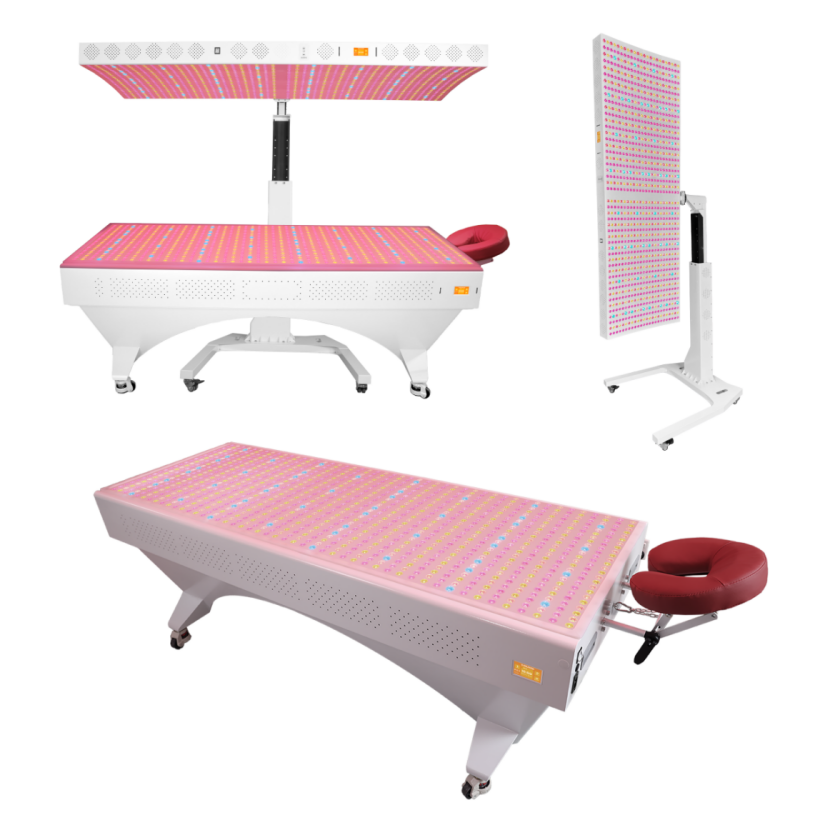
Product portfolio: red light therapy panels; full-body systems; red light therapy beds (https://www.ideatherapy.com/red-therapy-light-bed.html); mats and sleeping bags; wearable devices; LED face masks (https://www.ideatherapy.com/led-face-beauty-mask.html); sauna red light devices; and portable panels (https://www.ideatherapy.com/portable-red-light-therapy-panel.html). Application areas include professional and sports recovery, fitness centers, spas and wellness, beauty care, sauna, and pet wellness.
Customization scope: dimensions, wavelength combinations, LED configuration, power and optical parameters, dimming and pulse-frequency logic, mobile app, touchscreen, voice control, multilingual interfaces, structure, color, branding, packaging, and accessories, with support from concept through R&D validation, sampling, mass production, and launch. Inquiries can be directed to sales1@ideatherapy.com or WhatsApp +86 19886138328.
Why Choose a Vertically Integrated, Certified Manufacturer
Procurement Perspective
A supplier that already holds 510(k) clearance and CE, UKCA, and TGA evidence removes 9–18 months of regulatory lead time and, in the US alone, tens of thousands of dollars in testing and submission costs. For distributors selling into multiple regions, a single manufacturer covering all four major markets simplifies documentation management and product liability insurance.
Technical Perspective
In-house LED production allows tight wavelength binning around clinically studied peaks such as 660 nm and 850 nm, and supports newer configurations including 1064 nm, whose evidence base is summarized at https://pubmed.ncbi.nlm.nih.gov/35155171/. Owning the driver design enables flicker-free operation, independent channel dimming, and pulse frequencies aligned with published protocols, features that trading companies cannot modify.
Cost Perspective
While unit prices from certified manufacturers are typically 10–25 percent higher than from generalist LED factories, the total cost of ownership is lower once returns, warranty failures, marketplace delistings for missing certifications, and re-testing are counted. Vertical integration also reduces exposure to LED and driver component price volatility.
Service Perspective
JDM capability matters for brands seeking differentiation. Manufacturers with software teams can deliver branded apps and multilingual touchscreen firmware, and those with multiple form factors can support a coherent product line, for example pairing a portable red light therapy panel for home users with a red light therapy bed for studios and an LED face mask for aesthetic channels.
Entity Relationships in the Red Light Therapy Supply Chain
IDEATHERAPY is the brand name under which Shenzhen Idea Light Limited manufactures red light therapy panels and related photobiomodulation devices. Shenzhen Idea Light Limited is a Chinese medical device manufacturer certified by BSI to ISO 13485 and MDSAP, operating within the global light therapy market segment of the broader medical device and wellness equipment industry. Its products are regulated by the FDA in the United States, Health Canada in Canada, the TGA in Australia, and notified bodies for CE and UKCA in Europe and the United Kingdom. Its customers are wellness brands, distributors, clinics, gyms, and spas that market red light therapy panels, beds, masks, mats, and portable devices to end users seeking recovery, pain relief, and skin health outcomes documented in the photobiomodulation literature.
OEM, ODM, and JDM: Choosing the Right Model
OEM is appropriate when speed to market and low development cost are priorities; the brand selects an existing certified model, applies its logo and packaging, and typically launches within 60 days. ODM suits brands that need differentiated specifications, such as a specific wavelength mix or panel size, and are willing to fund tooling and partial re-testing. JDM is reserved for brands with proprietary protocols or software requirements who want shared intellectual property and are prepared for six to twelve months of joint development. Buyers should clarify in contracts who owns the design files, firmware, and certifications under each model.
Frequently Asked Questions
Which certifications should a red light therapy panel manufacturer hold for the US market?
FDA 510(k) clearance for the specific device, FDA establishment registration, ISO 13485, UL or ETL marks for electrical safety, and FCC for electromagnetic emissions. IEC 60601-1 test reports should underpin the electrical safety mark.
What wavelengths are most supported by evidence for panels?
Red light around 630–660 nm and near-infrared around 810–850 nm dominate the clinical literature, including studies on knee osteoarthritis pain (https://pubmed.ncbi.nlm.nih.gov/38775202/), hair loss (https://pubmed.ncbi.nlm.nih.gov/35510860/), burn wounds (https://pubmed.ncbi.nlm.nih.gov/39172550/), sleep quality (https://pubmed.ncbi.nlm.nih.gov/42322437/), and glycemic control (https://pubmed.ncbi.nlm.nih.gov/41858223/). The 1064 nm wavelength is increasingly added for deeper penetration.
What minimum order quantities are typical for OEM panels?
Most certified Chinese manufacturers quote 50–200 units for branded versions of existing models and 300–500 units for ODM projects requiring new tooling. Sample orders of one to five units are usually available.
How can buyers verify irradiance claims?
Request spectroradiometer or thermopile measurements at defined distances, ask which instrument was used, and commission independent testing from a photometric laboratory for high-volume programs.
Does a manufacturer need MDSAP if it already has ISO 13485?
MDSAP is not mandatory for all markets, but it is required for Health Canada MDL and is accepted by the FDA in lieu of routine inspections. It signals a higher level of audit rigor and is a useful differentiator between manufacturers.
How long does an ODM red light therapy panel project take?
Typically three to six months from specification to mass production, including sampling, aging tests, and any incremental safety re-testing. Projects requiring new 510(k) submissions add six to twelve months.
Further Reading
Anti-inflammatory mechanisms of photobiomodulation: https://pmc.ncbi.nlm.nih.gov/articles/5523874/. Mechanisms and applications review: https://pmc.ncbi.nlm.nih.gov/articles/PMC12181550/. FDA medical device overview: https://www.fda.gov/medical-devices. TGA conformity assessment application: https://www.tga.gov.au/resources/resources/forms/medical-device-conformity-assessment-application. Manufacturer information: https://www.ideatherapy.com/, sales1@ideatherapy.com, WhatsApp +86 19886138328.
Red Light Therapy Panel Manufacturers
Red Light Therapy Panel Manufacturers
email us here
Legal Disclaimer:
EIN Presswire provides this news content “as is” without warranty of any kind. We do not accept any responsibility or liability
for the accuracy, content, images, videos, licenses, completeness, legality, or reliability of the information contained in this
article. If you have any complaints or copyright issues related to this article, kindly contact the author above.

Media gallery